
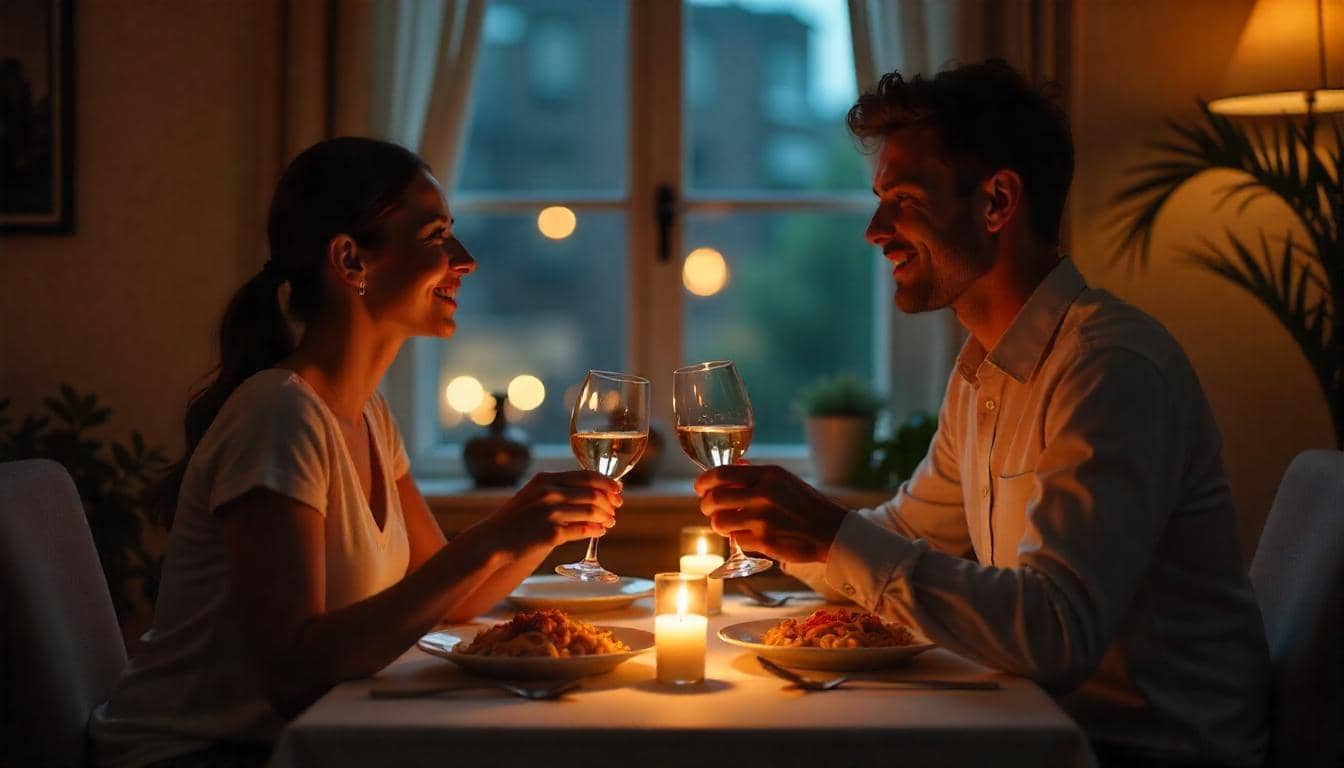
Virtual dates have a reputation for being awkward and stilted—staring at a grid of faces, talking over each other, never quite sure what to do with your hands. But that reputation is mostly a result of poor planning. A virtual date that's well thought-out can be just as connecting, and sometimes more intimate, than meeting in a loud bar. The key is treating it as a real experience rather than a substitute for one.
Setting Up Your Physical Space
Before anything else, look at what's visible behind you on camera. Good lighting makes a significant difference—a lamp in front of you (not behind) softens shadows and makes you look more present and awake. Natural light is best if you can position yourself near a window. Avoid sitting with a bright window behind you, which will wash out your face and make you look like a silhouette.
Tidy the visible background or add something interesting to it—a plant, a bookshelf, artwork. Background clutter reads as chaos on camera; a clean or curated background communicates that you've thought about this. Small details signal effort, and effort signals interest.
Test your audio and connection beforehand. Nothing kills momentum like spending the first ten minutes troubleshooting a frozen screen. Use headphones if possible—they dramatically improve audio quality and reduce echo. Run a quick test call with a friend or check the camera/mic through your settings before the date starts.
Choosing an Activity That Carries the Date
A virtual date without a shared activity is just a video call. Give yourselves something to do together. Cook the same recipe simultaneously—send each other the ingredient list beforehand and prepare your kitchens, then cook on camera together. This generates natural conversation, shared problem-solving, and an outcome you both eat. It works at almost any level of cooking ability.
Online games create low-stakes competition that brings out personality. Skribbl.io (collaborative drawing), GeoGuessr (geography guessing), or Jackbox games are easy to set up and require no downloads. They give you something to react to together, which is exactly what makes in-person dates feel natural.
Watch something together using a browser extension like Teleparty or a synchronized playlist. A short documentary, a standup comedy special, or a film you've both been meaning to see gives you shared content to discuss without putting all the pressure on pure conversation. This works particularly well if you're both already comfortable with each other and want something more relaxed.
Making the Conversation Feel Like a Real Exchange
The worst virtual dates feel like job interviews—one person asking a string of questions, the other answering, then switching. Break this pattern by sharing your own answers unprompted and asking follow-up questions that dig deeper than the surface. "What was it about that job that made you stay for five years?" gets you further than "What do you do for work?"
Prepare a handful of conversation starters in advance, but keep them loose. Not a script—more like interesting questions you've been thinking about lately. "If you could live somewhere you've never visited, where would it be and why?" or "What's something you changed your mind about in the last year?" These open doors rather than check boxes.
Humor is harder over video because timing is slightly off due to latency. Don't force it—but when something genuinely strikes you as funny, say so. Authentic reactions, even simple ones like "that made me actually laugh out loud," create warmth.
Creating Atmosphere Deliberately
Treat this like getting ready for a real date. Get dressed, not dramatically, but enough to feel like yourself at your best. This isn't about performing for the camera—it's about putting yourself in a mental frame that says "this matters." People who take virtual dates seriously tend to show up differently than those who roll out of bed and open a laptop.
Set the tone with small details: a candle, your preferred drink, background music at low volume. These physical elements ground you in the experience rather than keeping it feeling abstract. When both people make this kind of small effort, the date feels reciprocal—and reciprocity is attractive.
Decide in advance roughly how long the date will run. Knowing there's a natural endpoint removes the low-grade anxiety of wondering when it's okay to wrap up. If it's going exceptionally well, you can extend. If it's not, you have a clear out.
What to Do After the Virtual Date?
Send a short message within an hour or two afterward. Not a lengthy recap—just a specific observation or something that made you smile. "I'm still thinking about your answer about changing your mind on that—I want to hear more of that kind of thinking." Specific compliments carry far more weight than generic ones and show you were genuinely paying attention.
If the date went well and you're both in the same city or willing to travel, use the momentum to plan an in-person meeting. The transition from virtual to real becomes much easier when there's already a foundation. You'll recognize each other's speech patterns and sense of humor, which takes much of the awkwardness out of that first physical meeting.
If you're in different cities, a series of virtual dates can build real closeness—especially when they're varied. Don't just repeat the same video-call format each time. Switch up activities, try different times of day, or do something spontaneous and low-effort between structured dates. The consistency of contact matters as much as the quality of individual dates.
Why Virtual Dates Often Feel Hollow — and How to Change That?
The most common complaint about virtual dates is that they feel transactional — more like a video call than a shared experience. This is usually not a technology problem but a structure problem. When two people sit in front of their respective screens with no shared activity, no particular agenda, and no transition from ordinary life, the result is a conversation without context, which is much harder to sustain than in-person interaction where the environment does some of the social work.
The gap between a virtual date that feels like a chore and one that genuinely creates connection is almost entirely about intentional structure. The same two people, the same technology, the same amount of time — approached with deliberate design rather than default video call format — produce dramatically different experiences. Understanding what creates that difference is what makes the difference possible.
The Elements That Make a Virtual Date Feel Real
A clear beginning and end. One of the features of in-person dates that virtual formats strip away is the natural structure of arrival, setting, and departure. Creating equivalent structure online — a specific start time, something that marks the beginning (both partners lighting a candle, both raising a first drink), and a clear anticipated end — transforms an open-ended video call into a bounded experience with its own rhythm.
A shared activity that is not just talking. Conversation is a component of a date, not the whole date. In person, environment, food, movement, and observation all contribute. Online, this has to be created deliberately: cooking the same recipe simultaneously, watching a film with a messaging thread running alongside, doing an online quiz together, sketching each other, playing a game. The activity creates shared reference points, produces natural topics for conversation, and reduces the pressure on conversation alone to carry the entire experience.
Reduced ambient distraction. One of the strongest predictors of a virtual date feeling real is the extent to which both people are genuinely present rather than partially elsewhere. Phones face-down, notifications off, choosing a background that is not distracting or visually chaotic — these choices signal investment and make it possible for the connection to deepen rather than fragment across competing stimuli.
Specific Virtual Date Ideas That Work Well
Synchronised meal with a shared recipe. Each person shops for the same ingredients and cooks simultaneously on video. The process itself is naturally conversational — comparing techniques, troubleshooting together, the chaos of parallel kitchens — and the shared meal at the end has genuine meaning that a parallel delivery does not.
Virtual museum or gallery tour. Most major galleries now offer online tours or high-resolution collection browsing. Choosing one together and moving through it simultaneously, sharing reactions in real time, produces exactly the kind of gradual revelation of taste and perspective that makes in-person gallery visits such good date settings.
Online escape room. A number of platforms offer online escape rooms designed for two players. These require genuine collaboration — communication, problem-solving, and occasional disagreement about approach — and the shared goal creates natural togetherness that two people talking in parallel cannot reproduce.
Watch party with commentary. Choose something that neither person has seen. Most streaming platforms offer synchronised watching features, or browser extensions provide them. The running commentary — reactions, predictions, disagreements about characters — creates the experience of watching together rather than separately and then comparing notes.
Transitions: Beginning and Ending Well
The transition into and out of a virtual date matters more than most people recognise. Jumping directly from work or ordinary life into a video call does not create the psychological shift that arriving somewhere in person does. A five-minute personal preparation — changing out of work clothes, making a drink, spending a moment with something pleasant — creates the internal shift that allows genuine presence rather than the residue of whatever came before.
Ending a virtual date also benefits from intentionality. Hanging up abruptly after the conversation naturally ends can leave both people feeling oddly deflated despite having enjoyed the experience. A brief explicit close — "I have really enjoyed this, I am looking forward to the next one" — creates the same sense of completion that leaving a restaurant or walking someone home provides in person.


